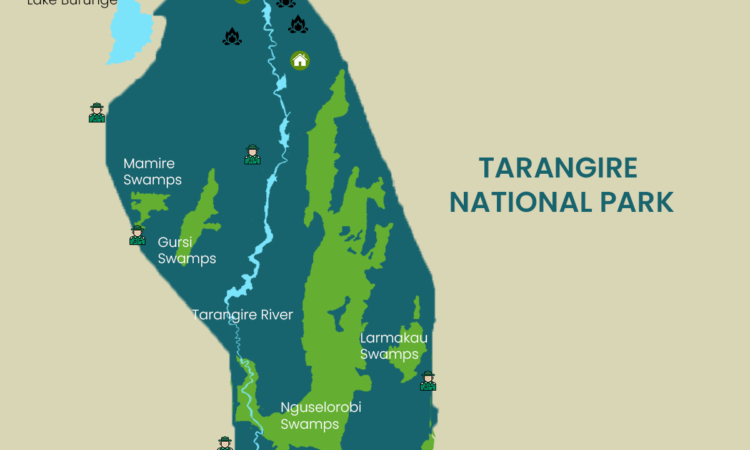
The ecosystem of Tarangire National Park is one of the key reasons why the park is important in Tanzania. It is located in the northern circuit and covers about 2,850 square kilometers. The park is well known for large elephant herds and baobab trees, but it also has many other animals, plants, and landscapes that support life.
Geographical Features
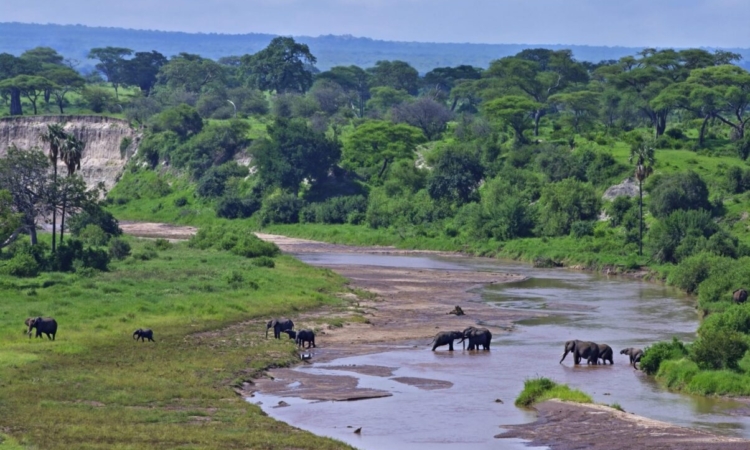
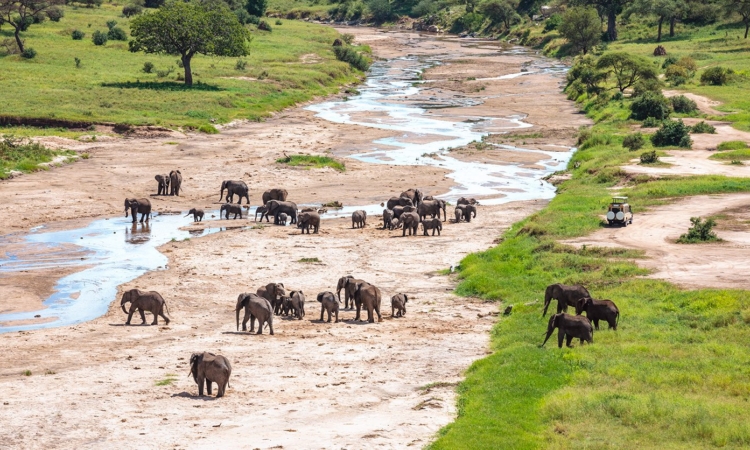
Tarangire National Park has different land features such as ridges, river valleys, and open plains. One of the most important parts of the ecosystem of Tarangire National Park is the Tarangire River. This river is the main source of water, especially during the dry season from June to October and also around December to February.
During the dry season, many animals move from other areas and gather near the river to find water. This movement of animals helps balance the ecosystem and supports survival during dry months.
Vegetation Zones in Tarangire
The ecosystem of Tarangire National Park includes several vegetation types that provide food and shelter for animals.
- Acacia Woodland: Acacia woodland covers large parts of the park. These areas have umbrella thorn acacia trees and support animals like elephants and giraffes.
- Baobab Trees: Baobab trees are common in Tarangire and are known for their large size. These trees can store water, which helps animals during the dry season. They also provide food and shelter.
- Riverine Vegetation: This type of vegetation grows along the Tarangire River. It stays green for most of the year and supports animals such as monkeys, waterbucks, and sometimes leopards.
- Savanna Grasslands: Grasslands cover the flat areas of the park. During the rainy season, grass grows well and becomes food for animals like buffaloes, zebras, and antelopes.
Wildlife Species in Tarangire
The ecosystem of Tarangire National Park supports many animals. There are over 55 mammal species and more than 500 bird species. Elephants are the most common animals and often move in large groups of up to 300.
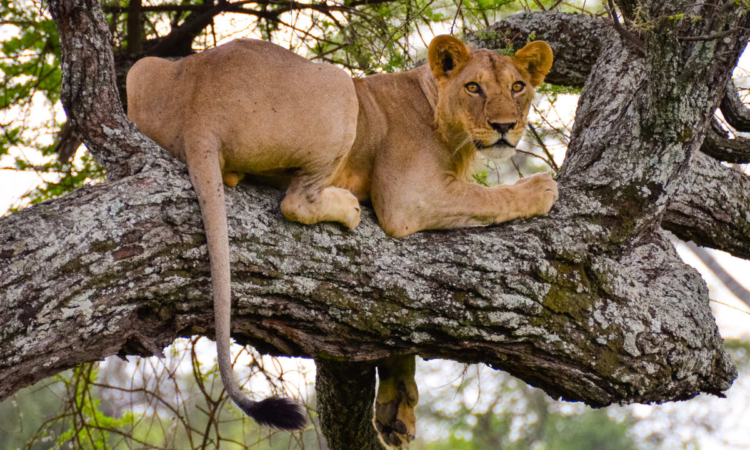
Other animals include buffaloes, zebras, wildebeest, lions, leopards, hyenas, wild dogs, and cheetahs. The park also has many bird species such as the kori bustard, secretary bird, African fish eagle, grey heron, goliath heron, martial eagle, lilac breasted roller, and yellow collared lovebird.
Importance of the Ecosystem
The ecosystem of Tarangire National Park is important because all parts work together to support life. The river, plants, and animals depend on each other. This balance makes Tarangire one of the key national parks in Tanzania and a good place for wildlife conservation and tourism.
Discover Tarangire National Park in Tanzania by selecting one of our recommended Tanzania tour operators or book with us directly below.